


Objectives
- Equip students with recognised communication frameworks such as ICE, SPIKES, and SBAR
- Address common communication gaps that affect OSCE and PLAB-style performance
- Support postgraduate portfolio development in line with UK and international training expectations.
Activities
- Brief framework-based teaching
- Structured role-play scenarios
- Peer and facilitator feedback
- Group debrief and reflection
- Formal feedback collection
What we've done
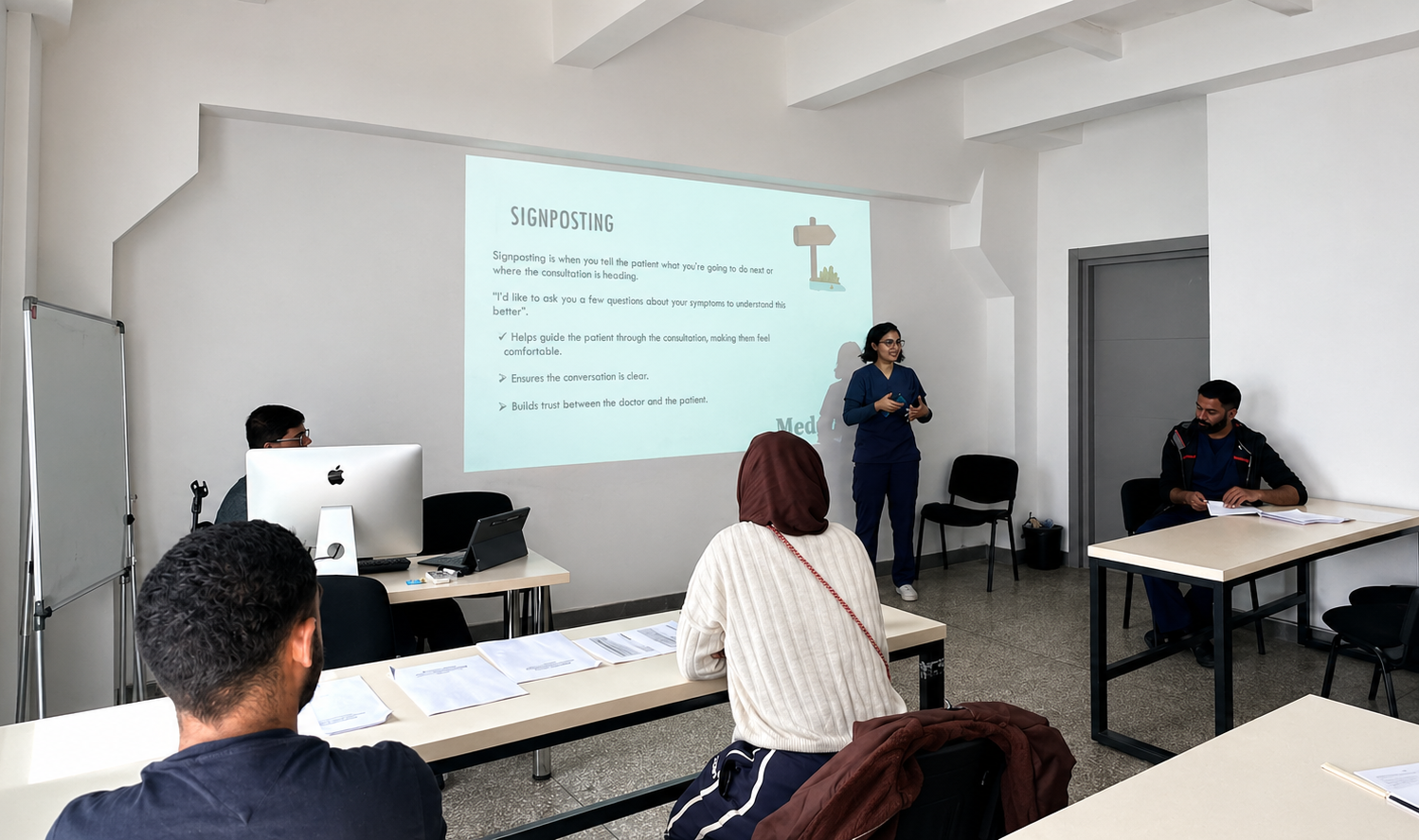
MedComm Introductory Meeting
April 25, 2026
Marking its first official event since its establishment, Medcomm hosted a comprehensive training session focused on clinical communication.
The session commenced with an introductory talk outlining the program's objectives, expected outcomes, and the vital role of strong communication skills within clinical settings. This was followed by a detailed teaching segment that introduced key consultation frameworks heavily utilized in NHS practice, including the Calgary-Cambridge model, ICE frameworks, signposting, and safety netting.
To bridge the gap between theory and application, the session featured a live demonstration of a clinical consultation. Following this, students transitioned into small groups of three to engage in practical exercises. Using structured patient and doctor scripts alongside model answers, participants practiced their skills in a setting that encouraged peer-based learning and the direct application of key concepts. Each student was then assessed individually through a mock OSCE-style timed consultation under exam conditions.
The event concluded with the collection of feedback forms. The insights gathered from these evaluations will be instrumental in refining and enhancing the quality of future training sessions.
MedComm
The MedComm Society (Medical Communication & Clinical Skills) is a student-led academic society focused on strengthening structured clinical communication, professionalism, and examination readiness. While textbooks provide the foundation, the ability to navigate shared decision-making, clinical escalation, and breaking bad news requires deliberate, hands-on practice. We provide a structured environment to master these competencies, ensuring our members are prepared for the nuances of real-world patient care and the high standards of OSCE and PLAB examinations.
Recognizing that communication _ rather than clinical knowledge _ is often the primary hurdle for students and international medical graduates, our society offers free, weekly simulation-based sessions. By focusing on patient-centered communication and UK professional standards, MedComm Society empowers students to transition from the classroom to the clinic with confidence, professionalism, and the skills necessary for long-term career success.